Menu

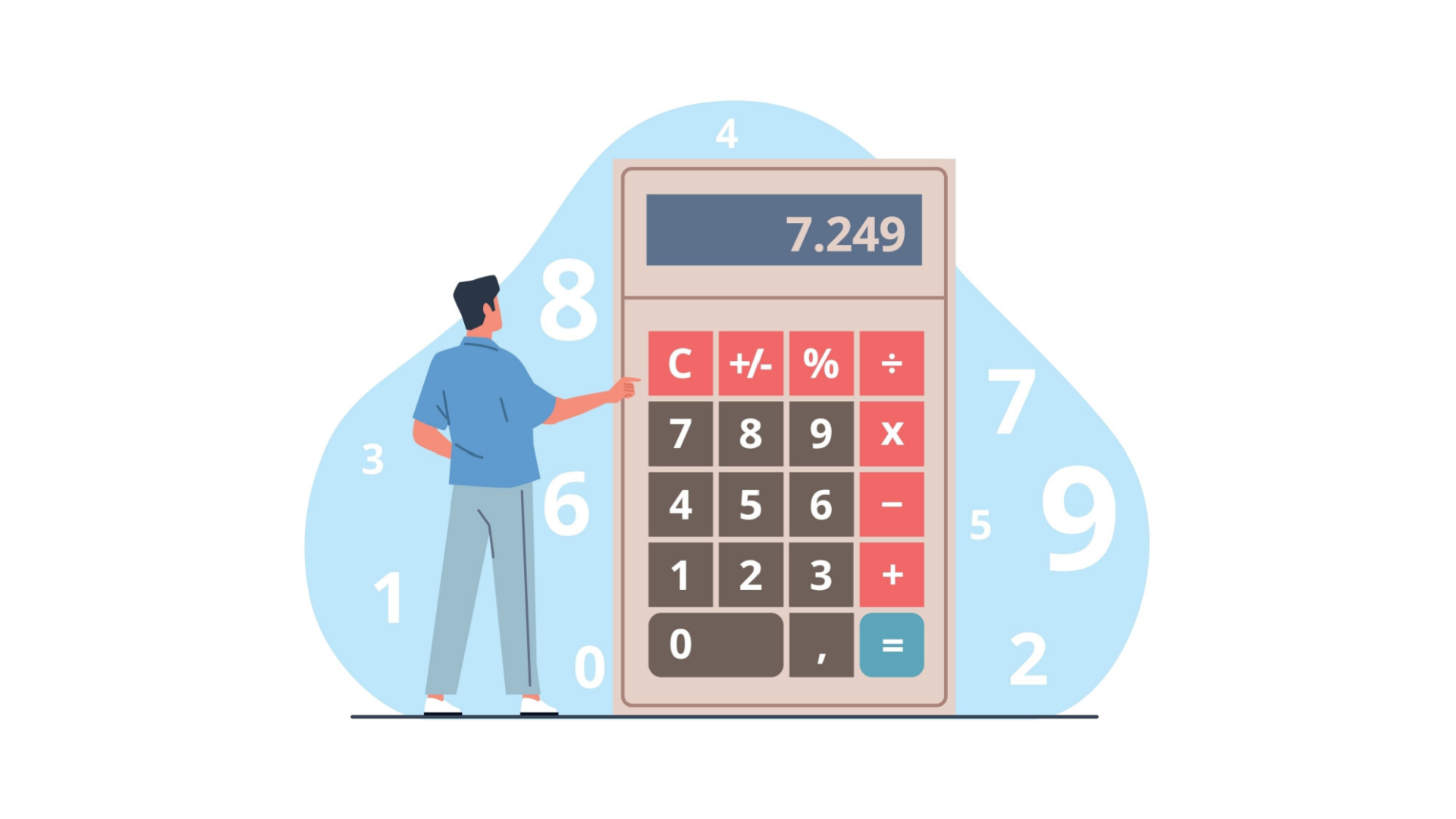
Navigating the vast digital landscape for computational tools can be a daunting task, yet many individuals and businesses rely on specific functionalities for their daily operations. Whether you’re a student tackling complex equations, a professional managing finances, or a DIY enthusiast calculating project requirements, finding the right digital assistant is paramount. For many, the go-to resource for quick and accurate results is a versatile online calculator, offering accessibility and a wide range of functions without requiring software installation.
Selecting the Right Online Calculator
The utility of an online calculator extends far beyond simple arithmetic; modern tools offer sophisticated functions for finance, science, engineering, and everyday life. When choosing, consider the specific problem you need to solve. A basic calculator might suffice for simple sums, but complex tasks such as mortgage amortization, statistical analysis, or unit conversions demand specialized instruments. Prioritize tools that offer clear interfaces, comprehensive function lists, and reliable accuracy.
Furthermore, evaluating the user experience is crucial for efficiency. Look for calculators that are intuitive to navigate, with clearly labeled buttons and input fields. Many advanced online calculators also provide helpful explanations, examples, or even graphical representations of the results, aiding comprehension and application. The ability to save or export calculations can also be a significant benefit for record-keeping and workflow integration.
Essential Features of a Versatile Online Calculator
When comparing different online calculator platforms, attention should be paid to the breadth of their functionality. Some might excel in scientific notation and logarithms, while others offer robust financial tools like loan payment calculators, compound interest calculators, or tax estimators. The best platforms often provide a diverse suite, catering to multiple user needs under a single digital roof. It’s also wise to check if the calculator supports different input formats or units, as this significantly impacts its practical applicability.
- Standard Arithmetic Operations (+, -, *, /)
- Scientific Functions (Trigonometry, Logarithms, Exponents)
- Financial Calculations (Interest, Loan Payments, Annuities)
- Unit Conversions (Length, Weight, Volume, Temperature)
- Statistical Tools (Mean, Median, Standard Deviation)
- Programming & Engineering Functions
Beyond the core functions, consider the platform’s design and performance. A calculator that loads quickly and responds instantly to input enhances productivity. Responsiveness across different devices, from desktops to mobile phones, is also a key indicator of a well-developed tool. Security and privacy policies are also important, especially if you are inputting sensitive financial or personal data.
Comparing Online Calculator Options
The market presents a spectrum of online calculators, ranging from single-purpose tools to comprehensive suites. For individuals needing occasional calculations, free, ad-supported websites might be sufficient. However, for professionals or students requiring advanced, specialized functions, investing time in finding a robust, feature-rich platform is essential. Consider the accuracy of the algorithms, the availability of customisation options, and the clarity of the output provided by each tool.
| Calculator Type | Primary Use Case | Key Features to Look For |
|---|---|---|
| General Purpose | Everyday math, basic budgeting | Simple interface, standard operators |
| Scientific | STEM education, research | Advanced functions (sin, cos, log), parentheses support |
| Financial | Personal finance, business planning | Loan amortization, investment growth, tax calculations |
| Unit Converter | Cross-border trade, travel, science | Wide range of units, real-time conversion rates |
When evaluating, it’s beneficial to test out a few options with real-world problems. See which interface feels most natural and which provides the clearest, most actionable results for your specific needs. User reviews and ratings can also offer valuable insights into the reliability and usability of different online calculator services, helping you make an informed decision.
Advanced Features and Customization
Many advanced online calculators go beyond standard operations by offering specialized modules or the ability to customize settings. This can include memory functions, constant values, or the option to define custom variables. For scientific and engineering applications, the capacity to handle complex numbers, matrices, or symbolic calculations can be indispensable. Such features are typically found on more dedicated platforms rather than general-purpose calculators.
Customization can also extend to the visual presentation of results. Some calculators allow users to format output for specific reporting needs, such as setting decimal places, using scientific notation, or choosing currency symbols. Exploring these advanced options ensures that you select a tool that not only performs the required calculations but also integrates seamlessly into your workflow and presentation requirements.
The Future of Online Calculation Tools
The evolution of online calculators is continuously driven by technological advancements and increasing user demands for sophistication and integration. Future iterations are likely to incorporate more AI-driven features, offering predictive capabilities, intelligent error detection, and even natural language processing for query input. The trend towards cloud-based solutions will also continue, enhancing collaboration and data synchronization across devices and teams.
As these tools become more sophisticated, their role in education, research, and professional sectors will only grow. The ability to access powerful computational resources through a web browser is democratizing complex mathematical and scientific analysis. Staying informed about emerging features and platforms will ensure you always leverage the most efficient and effective online calculator available for your tasks.